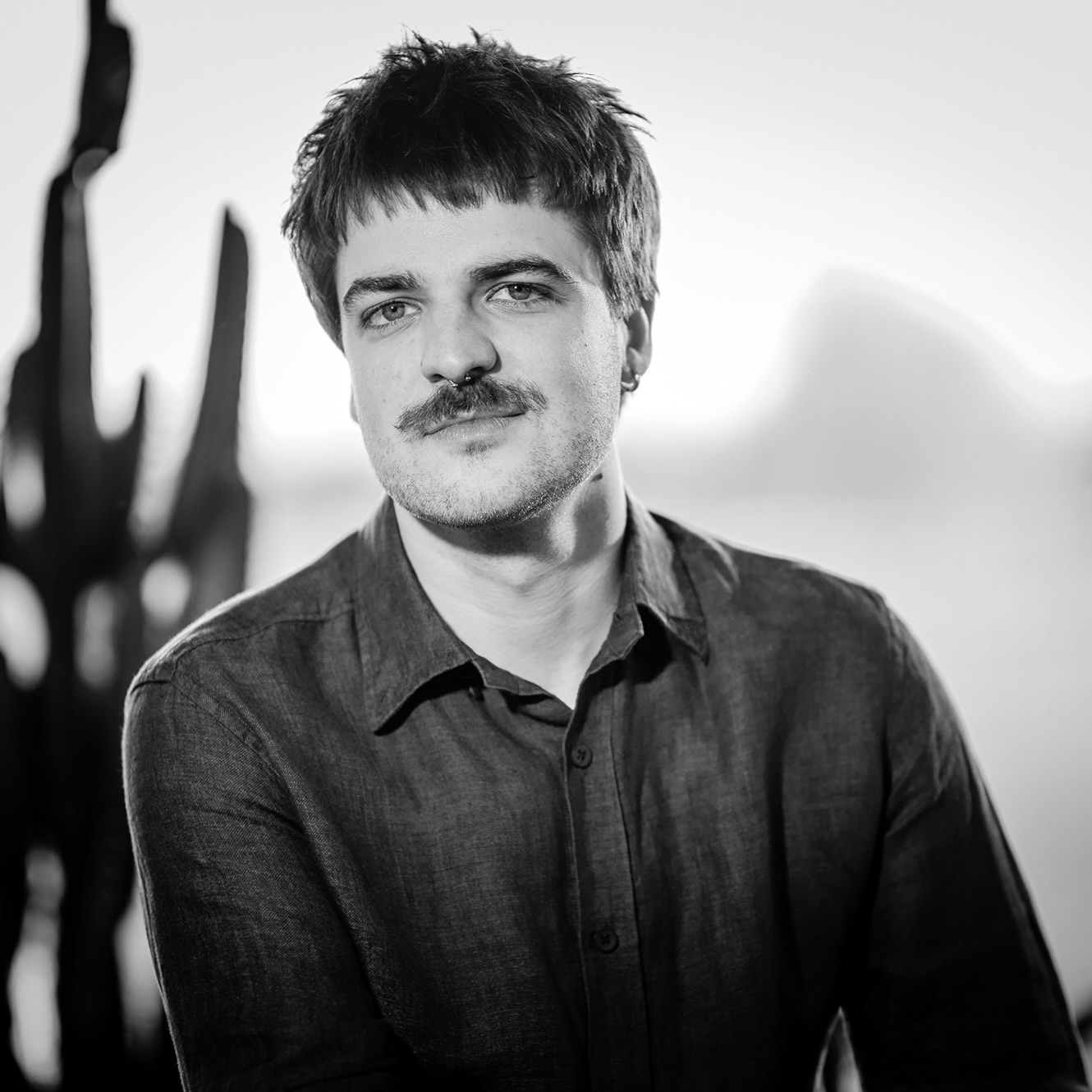
Hi, I’m Mikolaj!
I’m a first-year PhD student at the University of Copenhagen, affiliated with the Pioneer Centre for AI, under the supervision of Christian Igel, with Sebastian Weichwald and Yevgeny Seldin as co-supervisors. In my research I’m interested in developing robust uncertainty quantification methods for machine learning (ML) and applying them to earth observation tasks with a mission to ensure that ML-driven environmental solutions are both reliable and impactful.
Please feel free to get in touch!
Research
My current research focuses on developing methods that provide mathematically rigorous uncertainty estimates, even in the presence of strong model misspecification or when dealing with complex, heteroscedastic, and non-normal noise distributions. In particular, I explore frameworks such as conformal prediction and PAC-Bayesian analysis. Beyond the theoretical aspects, I am deeply passionate about the practical applications of machine learning. In my research, I aim to apply these uncertainty quantification methods to Earth observation tasks, where reliable uncertainty estimates are often crucial for decision-making. Prior to my PhD, my work centered on probabilistic machine learning and its applications in astrophysics and medicine.
Teaching
Teaching Assistant at the University of Copenhagen during my Master’s studies in three subsequent Master-level courses (2022-2023).
Primary responsibilities included holding three-hour Q&A sessions, where I helped students with the weekly assignments and whole course material, and handling grading.
Studies
I earned my Bachelor’s degree in Computer Science from the University of Warsaw, specializing in software engineering and mathematics. My Bachelor’s thesis focused on developing a Kubernetes cluster autoscaler for ScyllaDB. During my studies, I also explored bioinformatics and had my first exposure to ML. This initial curiosity grew into a strong passion during the first year of my Master’s, also in Computer Science, at the University of Copenhagen. In my second year, I began teaching and gained hands-on ML research experience — first by working on a medical ML project outside the standard curriculum, and later through my Master’s thesis, which applied probabilistic ML to astrophysics. The promising results of my thesis led to a research assistant position at DARK, where working alongside many inspiring scientists further fueled my passion for research and helped define my academic path.